A masia is a centuries-old stone farmhouse, and restoring one means keeping what makes it a masia — walls, beams, vaults — while adding the services and comfort of this century. Done wrong, it is the most expensive mistake in Catalan property.
A masia is the traditional Catalan farmhouse: thick load-bearing stone walls, timber floor beams, often a brick vault over the ground floor, and an attached era, barn or wine store. The oldest are medieval; most of what comes to market was built or rebuilt between the 1600s and the 1800s. They are the most characterful property in Catalonia and the easiest to ruin.
The thing to understand before you buy one is that a masia is built to breathe. Thick stone walls with lime mortar move moisture in and out continuously. The standard modern renovation — cement render, impermeable paint, a sealed concrete floor slab — traps that moisture inside the wall, and within a few years you have salt damage, failing plaster and rotting beam ends. Much remedial work on old masies is undoing a previous cement-based renovation.
So the order of work is not the order you would use on a flat. Structure, then roof, then damp, then services, and only then the parts you can see. Walls and beams get consolidated and repaired; the roof is rebuilt with insulation because it protects everything below it; rising damp is treated with breathable lime-based systems and drainage, never with cement.
The other half of the job is that masies sit on rural land, which is a different legal world from a flat in Barcelona. Planning rules on sòl no urbanitzable, heritage protection and change-of-use restrictions all bear on what you are allowed to do, and mains services often simply are not there. We work with technical architects who know rural planning and we handle the licence. If what you are looking at is a village house rather than a farmhouse, see façade restoration and full home renovations.
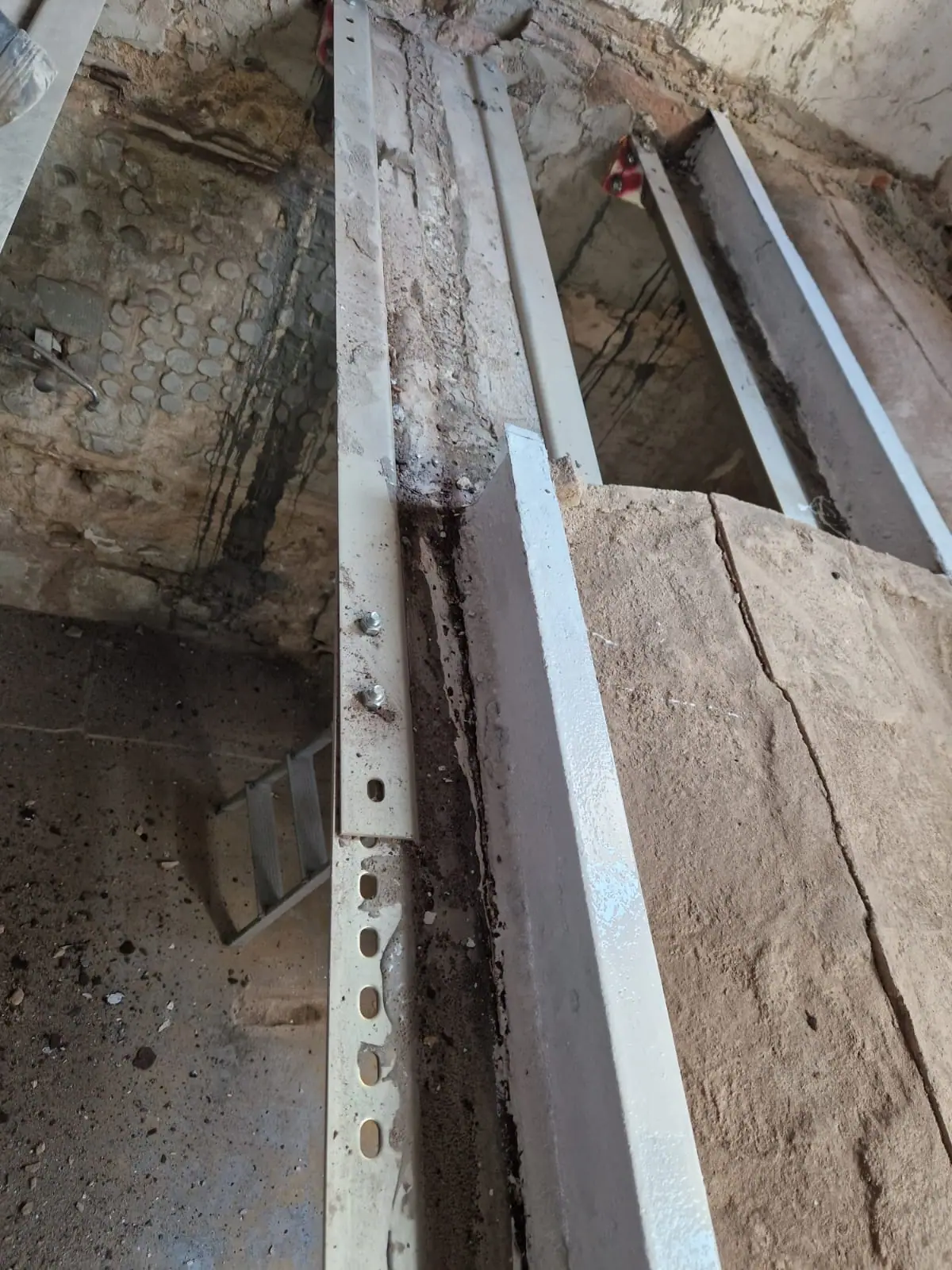
Twelve to thirty months is normal, and the first third of that is survey, drawings and permits. Anyone quoting you a masia in six months has not looked at the roof.
We assess the structure, the roof, the damp and what services actually reach the property, with a technical architect who knows rural planning. The drawings and the quote come out of that, and so does an honest view of whether the building is worth what is being asked for it.
Repair and strengthening of stone walls, timber beams and vaults, working with the original construction system rather than against it. Replacement beams are timber, not steel hidden in a box.
The roof is rebuilt with insulation, and rising damp in the walls is treated with breathable systems. This phase is what protects everything that follows, and it is the one people are tempted to economise on.
Water from the mains, a well or a tank; drainage to a septic tank or a treatment plant; electricity with certification; heating by air-source heat pump or biomass. On a rural plot none of this can be assumed.
Lime plaster, exposed stone, timber and period or compatible floors. Final clean, certificates and warranty.
We come to the masia, assess its condition and establish what services reach it. Free, anywhere in Catalonia, and genuinely useful before you buy as well as after.
Drawings that respect the building, and a quote with the structural and roof work itemised separately — because those are the two that can move, and you should be able to see them.
One site manager coordinates stonemasons, carpenters and service engineers, with photographs and video of progress. That matters if you do not live nearby.
A habitable masia, with certificates and a written warranty. Where you need a habitability certificate, we arrange it.
Stone, timber and vaults get restored and left visible rather than boxed in. The character is the whole reason the building is worth more than its square metres.
Lime, stone and timber, compatible with how the building was made. Not cement render, which suffocates a stone wall and causes the damage it was meant to prevent.
Breathable treatments and drainage for stone walls, after finding where the water is actually coming from. A masia that is dry is a masia that lasts.
Wells, treatment plants, air-source heat pumps, biomass and solar for masies with no mains services. See solar power.
Technical architects who know non-developable land and heritage-protected restoration, and who file the licence rather than leaving it with you.
A single site manager for a job that runs over a year or more, on a property you probably do not live near.
Per square metre of floor area, VAT excluded. Structure and roof are quoted separately, because they are the two items that genuinely cannot be guessed.
| Specification | What it covers | Per m² (excl. VAT) | |
|---|---|---|---|
| Functional restoration | Standard finishes, practical solution | 900 – 1,300 €/m² | |
| Mid-range | Selected materials, best balance | 1,300 – 1,800 €/m² | |
| High specification | Premium materials and high-end interior design | 1,800 – 3,000 €/m² |
Indicative only. VAT excluded. The final figure is a fixed written quote after the free survey.
Indicative ranges for the restoration, VAT and professional fees excluded.
A masoveria — the smaller farmhouse that housed the tenant farmer — or a compact masia. Structure, roof and services set the floor on the price regardless of how little you finish.
A common size: two or three storeys with rooms worth preserving.
Large farmhouses with a threshing floor, outbuildings or a wine store. The figure comes out of the drawings, and we will not pretend otherwise.
Rebuilding the roof and consolidating walls and beams, quoted on its own with photographs of the condition. Often the right first phase if you are buying now and restoring later.
These are restoration figures and they assume you are keeping the building’s use as it stands. Changing the use — farm building to dwelling, dwelling to rural tourism — is a separate legal process with its own feasibility study, drawings and licence, and it is not always granted. We tell you whether it is realistic before you spend anything on drawings.
What a turnkey masia restoration covers, and the items that are genuinely separate.
VAT is shown as its own line: 10% on the restoration of a dwelling at least two years old billed to a private individual, 21% otherwise. On a masia the distinction matters more than usual, because a building that is not currently a legal dwelling is not a restoration for VAT purposes. We confirm which applies in writing before you sign.
A masia needs most of this list, and a few trades that a flat never will.
Masies across Catalonia — the Empordà, Osona, the Garrotxa, the Penedès and inland. Find your area.
Official boundary data for comarques and municipalities (ICGC, 2025).
What buyers ask us about masies, usually before they have bought one.
Generally yes, but with real conditions. Rural planning rules and heritage protection restrict extensions and changes of use, while restoration that keeps the existing use is usually permitted. What is almost never permitted is treating a ruin as a building plot. The answer depends on your specific municipality and on whether the building is catalogued, which is a thing we check for you — and the honest answer is sometimes no.
Between 900 and 3,000 €/m² excluding VAT, with most full restorations landing between 1,300 and 1,800 €/m². For a 300 m² masia that is roughly 390,000 to 540,000 €. The reason it is two to three times a flat is that nothing exists yet: no sound roof, no services, no insulation, no damp-proofing. If a quote for a masia looks like a flat quote, something has been left out, and it will be the roof or the damp.
With breathable systems — lime mortars, perimeter drainage, and a physical barrier only where it is genuinely appropriate — that let a stone wall keep moving moisture. Never with cement, which traps it and makes the problem worse while hiding it for a couple of years. And by rebuilding the roof if that is where the water is actually coming from. Getting the diagnosis right is most of the job; see damp treatment.
Yes, and most masies do. An air-source heat pump handles heating, cooling and hot water efficiently, and biomass — pellet or logs — suits larger buildings and people who have their own timber. For water, the mains if it reaches you, otherwise a well or a storage tank; for drainage, a septic tank or a small treatment plant. We size all of it to the property rather than fitting a standard package.
Twelve to thirty months, and the first four to eight of those are survey, drawings and permits before anything happens on site. Rural licences take longer than urban ones and heritage consultation longer still. We give you a written programme, and we would rather tell you eighteen months at the start than twelve and then explain.
Yes, and it is free. The gap between what a masia is advertised at and what it costs to make habitable is the single biggest financial risk in Catalan rural property, and it is invisible from the photographs. We will tell you what the roof and the structure need, whether the services are there, and whether the use you have in mind is legally plausible.
Sometimes, and it is a change of use with its own process: a feasibility study, drawings, a licence, and compliance with accommodation regulations that are set regionally and by the municipality. It is more often granted for a building that is already a dwelling than for a barn. We will tell you honestly whether yours is a candidate before you spend money finding out.
Keep them, and that is the point. Stone walls get repointed in lime and left visible, good beams get repaired rather than replaced, vaults get consolidated. What genuinely has to go is anything structurally finished — beam ends rotted through, or a roof structure that has deflected past repair — and we show you photographs of why rather than asserting it.
No. A job this long runs on a written programme, regular photographs and video at each phase. What you should be here for is the material decisions — stone, lime colour, floors and joinery — because those are the ones that photograph least honestly and matter most in a building like this.
Renovating a masia as though it were a modern house: cement render on the walls, a sealed slab on the ground floor, plastic paint, sealed windows. It looks finished and it traps moisture in a structure designed to release it, and in three to five years the plaster, the paint and eventually the beam ends start to fail. The second most common is spending the budget on the kitchen and leaving the roof for a later phase that never comes.
Practical guides to prices, materials, permits and the decisions that come up on site — so you can plan your flat refurbishment with your eyes open.
10,000 € buys a bathroom or a kitchen; a 60 m² flat starts at 34,400 € at functional level. What each budget covers up to 150,000 €, before VAT.
Read the article →Guides and adviceWhat a technical architect (aparejador) charges in Spain in 2026: fee percentages, fixed prices, what drives the cost and when hiring one is compulsory.
Read the article →Full renovationsWhat an architect charges for a renovation in 2026: typical rates, fees as a share of the PEM budget and how to keep the total under control.
Read the article →Free survey anywhere in Catalonia, including before you buy. Structure and roof quoted separately, with photographs.

