A pharmacy has its own regulations: a service area, a temperature-controlled store, a laboratory, a dispensing robot and accessibility, all wrapped in an image that inspires trust. We renovate to the pharmacy rules and, where possible, without closing.
A pharmacy looks like a shop and is regulated like a clinic. It has to provide the mandatory areas — a dispensing area, a store, in many cases a laboratory and a space for patient counselling — in the proportions and conditions set by pharmacy planning rules, and it has to be accessible. A fit-out that ignores those looks fine and does not pass inspection.
Three details decide the layout. Temperature control in the store, because medicines have storage limits. The dispensing robot, if there is one, which needs a structural opening, power, a data connection and sometimes a floor strengthened — we prepare the works and services for it, while the machine itself is supplied by the manufacturer. And flow: a counter arrangement and queue that works at peak.
The business also does not want to close. A pharmacy shut for six weeks loses its patients to the next one down the road, so we plan phases that keep dispensing going where the regulator allows. For other health premises, see clinics, and for the general process, commercial unit fit-out.
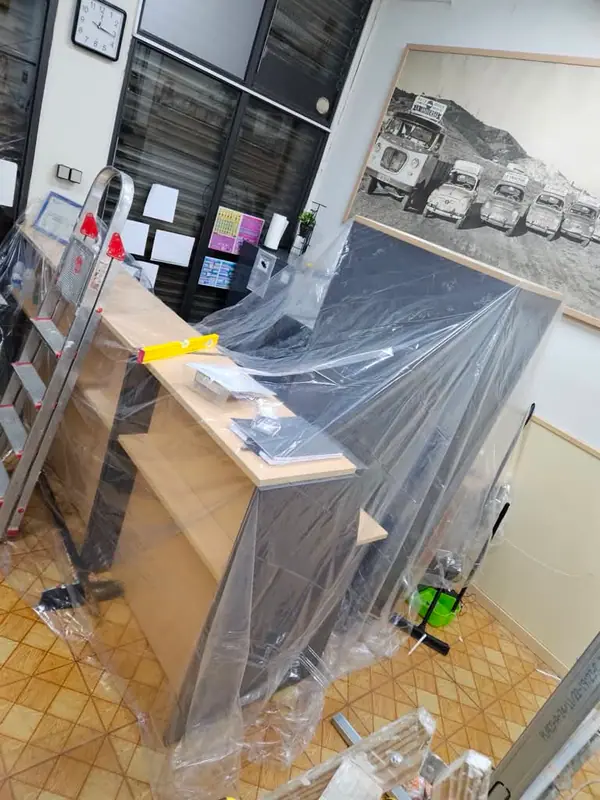
Typically six to fourteen weeks, phased where the regulator allows you to keep trading.
We check the layout against the mandatory areas and the accessibility rules, and agree with you what can stay open while the work is done.
Licence and technical project where required, and whatever notification the pharmacy regulator needs.
The work is divided so dispensing continues where permitted, with the public sealed off from the works.
Electrics, lighting, air conditioning with temperature control in the store, data and, if there is one, the robot preparation.
The store, the laboratory and the counselling space, built to the proportions the rules require.
Shelving, the dispensing counter, lighting and finishes that project trust.
Certificates, inspection and handover.
We visit and talk through the layout and what you need to keep trading. No cost and no obligation.
A fixed itemised quote, with the robot preparation priced separately from the equipment.
One site manager coordinates every trade, with a plan that keeps dispensing going.
Certificates and the documents the inspection needs.
The mandatory areas and accessibility are designed in from the start, not corrected after inspection.
The store is designed for the limits medicines have to be kept within.
We prepare the opening, power, data and floor, and coordinate with the manufacturer’s installer.
We plan to protect dispensing, because a closed pharmacy loses its patients.
Lighting, materials and layout that read as clean, calm and professional.
Every trade coordinated by one person.
Per square metre of floor area, VAT excluded. The robot and equipment are separate.
| Specification | What it covers | Per m² (excl. VAT) | |
|---|---|---|---|
| Refresh | Standard finishes, practical solution | 600 – 900 €/m² | |
| Mid-range | Selected materials, best balance | 900 – 1,400 €/m² | |
| Designer / high-end | Premium materials and high-end interior design | 1,400 – 2,200 €/m² |
Indicative only. VAT excluded. The final figure is a fixed written quote after the free survey.
Indicative ranges, VAT and equipment excluded.
Neighbourhood pharmacies. The mandatory areas and accessibility set the minimum.
The most common size, with a robot, a good parapharmacy range and a laboratory.
Large premises with compounding, personalised dosage and a wide parapharmacy range.
We prepare the works, the opening and the services for the dispensing robot. The equipment is separate.
Two questions to settle before you commit: what your pharmacy regulator requires for the changes you plan, and what the lease allows. We assess the first as part of the survey; the second is for your lawyer.
The scope of a turnkey pharmacy renovation, and what is separate.
VAT is shown as its own line — normally 21% on works for a business.
A pharmacy draws on most of this list, coordinated by one person.
Pharmacies in Barcelona and across Catalonia. Find your town.
Official boundary data for comarques and municipalities (ICGC, 2025).
What pharmacists ask before renovating.
Broadly, a set of mandatory areas — a dispensing area, a store, in most cases a laboratory and a counselling space — of minimum sizes, plus accessibility and conditions for storing medicines. The detail is set by the regulations and by your pharmacy regulator, and it changes, so we check the current position against your layout at the survey and bring in the regulator’s requirements before the design is fixed.
Often, by phasing: working in sections, sealing the work area from the public and protecting the dispensing counter and the store. Whether it is permitted for the changes you are making depends on the regulator, and we establish that first. If a short closure is the better answer, we tell you honestly and plan it for the quietest period.
Yes. We make the opening, provide the power and data, strengthen the floor where needed and coordinate with the manufacturer’s installer, so that the machine drops into a space that is ready for it. The robot itself is supplied separately by its manufacturer, and we take no part in selling it.
Roughly 600 to 900 €/m² for a refresh, 900 to 1,400 €/m² for mid-range and 1,400 to 2,200 €/m² for a designer scheme, excluding VAT and equipment. A 100 m² pharmacy at mid-range comes to around 90,000 to 140,000 € for the works.
Six to fourteen weeks, depending on the size and on how much of the pharmacy has to stay open. We give you a written programme.
In stages tied to completed work: a deposit on signing, payments at the end of each phase, and a final payment at handover. Never the full amount in advance.
Practical guides to prices, materials, permits and the decisions that come up on site — so you can plan your flat refurbishment with your eyes open.
10,000 € buys a bathroom or a kitchen; a 60 m² flat starts at 34,400 € at functional level. What each budget covers up to 150,000 €, before VAT.
Read the article →Guides and adviceWhat a technical architect (aparejador) charges in Spain in 2026: fee percentages, fixed prices, what drives the cost and when hiring one is compulsory.
Read the article →Full renovationsWhat an architect charges for a renovation in 2026: typical rates, fees as a share of the PEM budget and how to keep the total under control.
Read the article →Free survey anywhere in Catalonia. A regulatory check and a plan that keeps you trading.

