Repair the damage, make it watertight and insulate while the scaffolding is up. A façade job is a decision for the whole building, often forced by an inspection, and often eligible for grants. We prepare the case for the residents’ meeting and run the work.
The façade is the building’s skin: it keeps the water and the cold out. Over the decades it develops defects — cracks, damp, patches of render or cladding coming away — that are unsightly and, when pieces fall into the street, dangerous. That is why many façade jobs are not a choice. They are triggered by the ITE (Inspección Técnica de Edificios, the mandatory technical inspection of older residential buildings) or by an order from the council.
If you own a flat, the first thing to understand is that the façade is common property. It is decided by the comunidad de propietarios — the owners’ association — by vote, and paid for by all the owners in proportion to their share, usually as a one-off levy called a derrama. You cannot commission it on your own, and you cannot opt out of paying once it is voted. What you can do is make sure the meeting has a clear diagnosis and a comparable, itemised quote in front of it.
The smartest time to insulate is now. Scaffolding is the biggest single cost of a façade job, and it is already there. Adding external thermal insulation (known as SATE, or ETICS elsewhere in Europe) while the façade is open removes the thermal bridges, cuts the heating and cooling bill of every flat in the building, raises the energy rating — see energy certificates — and is the work that grants favour most.
We work with proper access equipment and safety protection, diagnose the cause of each defect before covering it, provide technical direction, and coordinate with the community’s administrator throughout. You get a fixed quote, a programme in writing, and help assembling the grant application. If the damp you can see inside a flat is coming through the façade, see damp treatment.
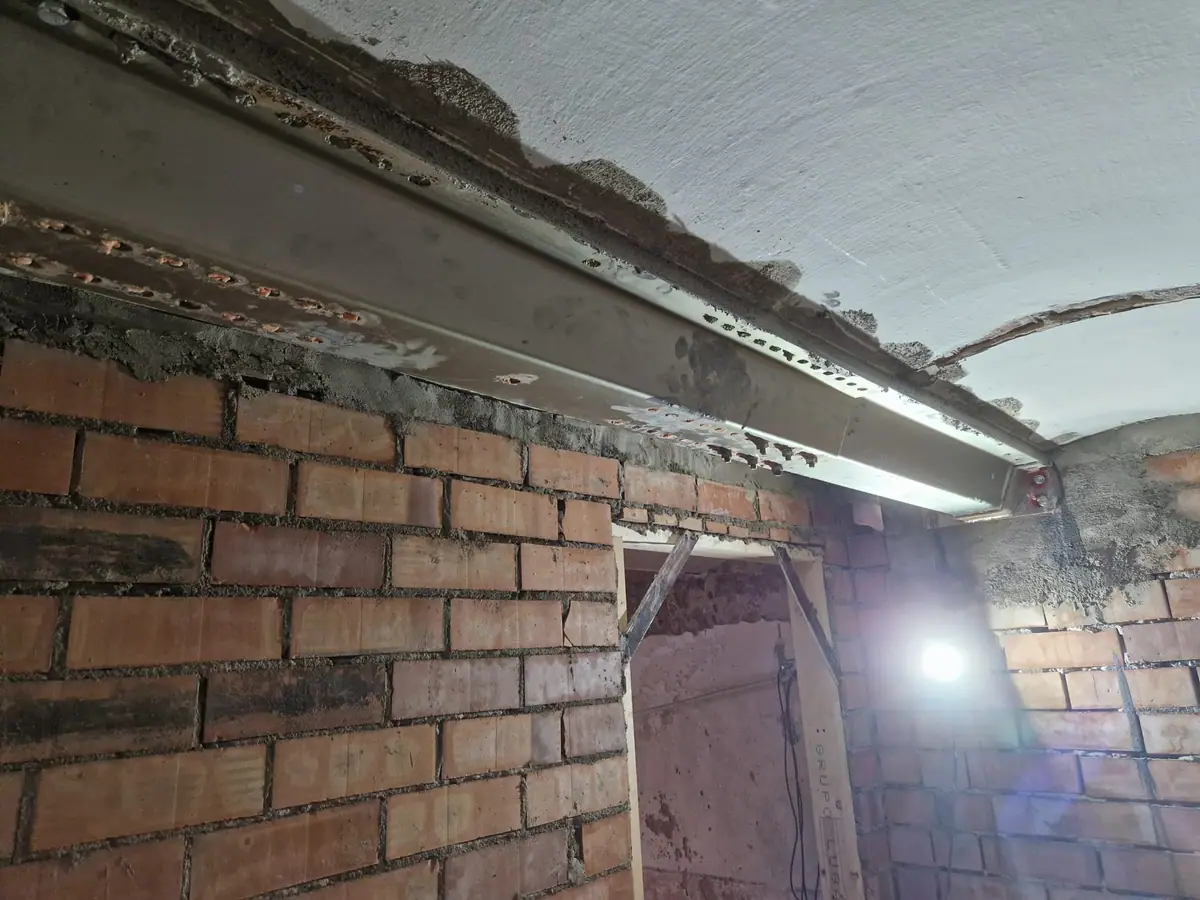
Four to ten weeks for a typical building, depending on size and on the weather — render and paint need to dry.
We examine the cracks, damp and failing material, measure the façade and prepare a written proposal and quote that the community can vote on.
We check which grants apply, then erect scaffolding or a work platform with the protection the street requires.
Failed areas are cut out and made good, cracks are treated, loose elements are secured and the substrate is consolidated before anything is covered.
The façade is waterproofed and, if the community chooses, insulated externally (SATE) or from the inside, which removes the thermal bridges.
New render, mortar, paint or cladding, and the treatment of balconies, cornices and any distinctive features.
Final certificate, removal of the scaffolding and a transparent final account for the community, with the warranty.
We inspect the building, assess the defects and give you a clear written report. No cost and no obligation, anywhere in Catalonia.
A fixed, itemised quote for the residents’ meeting, with the available grants identified, so owners are comparing like with like.
One site manager runs the job and keeps the administrator and the community informed of progress.
A final completion certificate, a transparent final account, and a warranty on the work.
We find where each defect originates before covering it. Repairing properly is what stops it coming back in three years.
Using the job to insulate the building reduces the bills of every owner and is what grants favour.
We identify the grants available and help assemble the application, which can cover a good share of the cost.
Access equipment, protection and safety coordination for residents and passers-by.
We resolve the deficiencies an ITE report lists, leaving the building compliant.
Itemised, comparable and with stage certification, so the owners’ meeting can decide with confidence.
Indicative ranges per square metre of façade, by scope. The final figure comes from the survey.
| Scope | What it covers | Per m² of façade (excl. VAT) | |
|---|---|---|---|
| Repair and repaint | Standard finishes, practical solution | 30 – 60 €/m² | |
| Waterproofing and new render | Selected materials, best balance | 60 – 110 €/m² | |
| Full SATE insulation | Premium materials and high-end interior design | 90 – 160 €/m² |
Indicative only. VAT excluded. The final figure is a fixed written quote after the free survey.
Indicative ranges for façade restoration, with VAT and scaffolding extra.
A block of a few storeys. Repair and repainting set the minimum.
The most common case, with waterproofing and often insulation.
Large façades with distinctive features and full insulation.
SATE and energy improvements are often eligible for support, which can cut each owner’s levy significantly.
On a façade the question that matters most is how much a grant could cover. Energy-efficiency grants are designed precisely for insulating façades, and the schemes available change from year to year, so we check what is open at the time you ask and prepare the quote and documentation for the application.
What a façade restoration covers, and what usually sits outside it.
VAT can be at the reduced rate on rehabilitation and energy-efficiency works, and we confirm which applies in the quote. Many of these works are eligible for grants, which reduce each owner’s share of the levy.
Façades connect to roofs, waterproofing and energy work; we coordinate all of it.
Façade work in Barcelona and across Catalonia. Find your town.
Official boundary data for comarques and municipalities (ICGC, 2025).
What owners and administrators ask about façade work.
The defects an ITE report lists have to be put right within the period it sets, which depends on how serious they are. The practical route is: a survey that confirms the diagnosis, a written proposal and an itemised quote for the owners’ meeting, a vote, and then the work with technical direction and a completion certificate. We prepare the first two so the meeting is deciding on facts, and we run the rest.
Not on your own: the façade is common property, so it is decided by the owners’ association by vote and paid for by all the owners in proportion to their shares. What you can do is ask the administrator to put it on the agenda, and bring a survey and a quote so the meeting is not voting on guesswork. We provide both, and attend the meeting to answer questions if the community wants us to.
Often, particularly where the work includes insulation. Energy-efficiency rehabilitation grants, including schemes funded by the EU’s Next Generation programme, have covered a meaningful share of the cost for buildings that qualify. What is available changes from year to year and is applied for by the community, not the individual owner. We check what is open when you ask, tell you honestly whether the building is likely to qualify, and help assemble the application.
SATE is external thermal insulation: insulation is fixed to the outside of the façade and finished with a new render. It removes the thermal bridges that insulation from the inside cannot, cuts heating and cooling costs across the whole building, protects the structure from temperature swings, and raises the energy rating. When the whole façade is being renovated and the scaffolding is already up, it is almost always the best use of the money, and it is the part grants most often support.
Roughly 30 to 60 €/m² of façade for repair and repainting, 60 to 110 €/m² with waterproofing and new render, and 90 to 160 €/m² with full external insulation, all excluding VAT and scaffolding. For a small block of up to 300 m² of façade that starts around 15,000 €, and a medium building of up to 700 m² around 35,000 €. Scaffolding is a separate and variable line. A grant, where one applies, comes off the total.
Four to ten weeks for an average façade, though it depends on the size, the access, and the weather: render, mortar and paint need dry days and cannot be rushed. We give you a written programme before the meeting votes, so that residents know how long the scaffolding will be up. Rain and cold can add days, and we tell you when that happens rather than letting the programme slide.
By stage certification against a clear programme, agreed with the community’s administrator. We do not ask for disproportionate advances, and each stage is certified against work done. Owners usually pay their share as a levy according to a payment schedule agreed at the meeting, which can be spread over the duration of the work.
Some, and we plan to keep it small. Scaffolding goes up and may cover windows and balconies for some of the period; noise is limited to working hours; and entrances and pavements are protected. We agree access arrangements with the administrator before starting and keep residents informed of what is happening on which side of the building. Anything that affects an individual flat, such as access to a balcony, we arrange with that owner directly.
If the cause is the façade, it is a common element and the repair is the community’s responsibility, not yours. The difficulty is establishing the cause, which is why we diagnose before quoting. Our written diagnosis, with photographs and moisture readings, is what you take to the administrator. See damp treatment.
Yes, and it is usually cheaper, because the scaffolding and the site set-up are shared. Water often enters at the junction between the two, so repairing one and not the other can leave the problem unsolved. We can survey both and quote them together. See roofs.
Practical guides to prices, materials, permits and the decisions that come up on site — so you can plan your flat refurbishment with your eyes open.
10,000 € buys a bathroom or a kitchen; a 60 m² flat starts at 34,400 € at functional level. What each budget covers up to 150,000 €, before VAT.
Read the article →Guides and adviceWhat a technical architect (aparejador) charges in Spain in 2026: fee percentages, fixed prices, what drives the cost and when hiring one is compulsory.
Read the article →Full renovationsWhat an architect charges for a renovation in 2026: typical rates, fees as a share of the PEM budget and how to keep the total under control.
Read the article →Free survey and written report anywhere in Catalonia. A quote the owners’ meeting can vote on, and help with grants.

