Renovating an old house in the centre of Rubí, between party walls: roof, floors, drainage, damp and services, and why each job comes before the next.
A village house in the centre, between party walls, is not renovated like a flat. There is no interior to renew and a structure to take for granted: you have to look at the roof, floors and walls before talking about kitchens or flooring. That is why the first visit is a diagnosis. We go up on the roof, look at the beams from below, tap the wall and lift a corner of the floor if we have to. That decides what is kept, what is reinforced and what is rebuilt, and only then is a price put on each item.
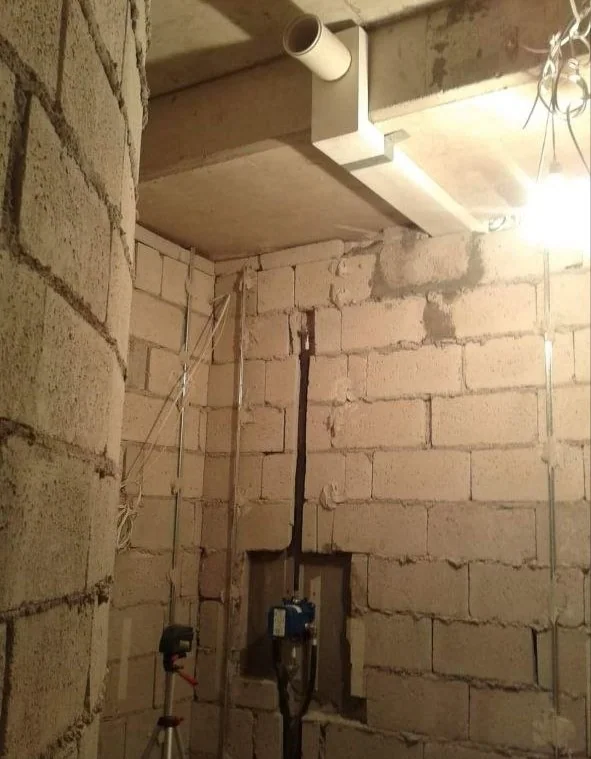
The order of work is almost always the same, and it is not negotiable. First the roof: if water is still getting in, everything you do underneath is ruined. Then the floors, which are checked, reinforced or replaced depending on the state of the beams and infill blocks. With the structure closed, the chases are opened. Nobody can run pipes through a floor they do not yet know will stay, or tile a bathroom over a beam that will have to be replaced.
What surprises most is under the floor: the buried drainage. In very old houses the downpipe and the main drain are often fibre cement or old stoneware, with broken joints, and there is often a leak feeding the rising damp on the ground floor. Rubí lives alongside its riera, the seasonal stream, so we never write off a stain on the wall as simple condensation without first checking where the water comes from. It is located, repaired, drainage or a barrier is planned, and only then is it rendered.
With the house dry and stable come the new services: electrics with their certificate, plumbing, drains, ventilation and, where relevant, preparation for aerothermal heating or underfloor heating. The windows and doors go in at the end of the rough work, because they depend on openings already adjusted. After that come the finishing touches and the paint. If someone suggests starting with the kitchen and leaving the roof for next year, the job is not well planned: what is expensive to redo is always what was covered up.
Indicative market ranges per square metre of floor area, VAT excluded. The final price is a fixed quote after the survey.
| Specification | What it covers | Per m² (excl. VAT) | |
|---|---|---|---|
| Functional | Standard finishes, practical solution | 520 – 650 €/m² | |
| Mid-range | Selected materials, best balance | 750 – 940 €/m² | |
| High specification / luxury | Premium materials and high-end interior design | 1,060 – 1,340 €/m² |
Indicative only. VAT excluded. The final figure is a fixed written quote after the free survey.
Full renovation of the whole property, from functional to mid-range specification, VAT excluded.
One bathroom, one kitchen. The price per square metre is higher in a small home, because the kitchen and bathroom cost almost the same whether the flat is 45 or 90 m².
The most usual size, with a kitchen, one or two bathrooms and a new layout. This is the size where opening the kitchen into the living room pays off most.
More floor and wall surface to finish and, often, two full bathrooms. Worth checking the riser capacity before planning a second wet room away from the first.
Large flats and houses. The budget depends heavily on specification and layout, and heating and cooling become a real design decision.
These figures assume the structure is sound. If the survey finds damp, aluminosis-affected concrete or a roof at the end of its life, that is a separate priced item and we will tell you before you commit, not halfway through. Damp treatment and façade work are quoted on their own.
The scope of a turnkey full renovation, and the things that genuinely sit outside it.
VAT is shown as its own line: 10% where the property is a home at least two years old, 21% where it is not, or on work billed to a company. If you are buying the flat and renovating it before you move in, the dates matter — tell us the completion date and we will tell you which rate applies.
The same team and the same fixed quote, for the rest of the home in Rubí.
What you find inside an old house changes with the area and with the period it was built.
One team for the whole job, in Barcelona and across Catalonia.
Renovating an old house in Rubí: what people ask before starting.
We do not give a figure per square metre for an old house, because two houses identical from the outside can differ greatly in roof, floors and drainage. The only honest thing is to see it. After the technical visit we hand you a quote fixed item by item, so you see which part is structure, which services and which finishes, and you decide what to do now and what to wait for.
Sometimes, but first you have to check that the structure holds. If the floors are sound and the roof does not leak, it can be restored from the inside only: services, layout and finishes. If there are rotten beams, loose infill blocks or a wall with active cracks, there is no sense investing in what goes on top. We see it on the visit and tell you plainly.
Renovating is renewing what you can see: kitchen, bathroom, floors, paint. Restoring is working on what holds up and protects the house: roof, floors, walls, drainage and damp. In an old home you almost always have to do the second before the first, which is why the quote has items that a modern flat does not.
Because a leak ruins the new work again. The sensible order is roof, floors, drainage, chases and services, windows and doors and, last, finishes. Each step protects the next. If you change the order, you end up chopping into a freshly tiled wall to run a pipe, or replacing a floor because damp came up from underneath.
It may be, but it should not be assumed. The usual causes are a leak in the buried drainage, rising damp from the ground, a lack of insulation at the base of the wall or a broken downpipe. On the visit we measure and trace the source. Until the water stops coming in, there is no point in rendering or painting over it.
It depends on what is touched. If floors, roof or load-bearing walls are involved, or the structural layout changes, you need a technical project and whatever authorisation or notification Rubí’s Ajuntament requires for the scope. If only services and finishes are renewed, a notification is usually enough. We confirm it on the visit and handle the paperwork ourselves.
Yes. In an old flat in a block or a period building the order is similar, though without a roof of its own: old services, damp, floors and layout. Flats in the old centre and in the established neighbourhoods mostly need pipework and the consumer unit renewed. Each case is quoted item by item, just like a house.
It depends on the scope, which is why we do not promise a figure before seeing the house. A restoration involving the structure takes quite a bit longer than a finishes renovation, because you have to let things dry, cure and be checked at each phase before moving to the next. After the visit we give you a phased programme, with a realistic date for each phase.
Practical guides to prices, materials, permits and the decisions that come up on site — so you can plan your flat refurbishment with your eyes open.
10,000 € buys a bathroom or a kitchen; a 60 m² flat starts at 34,400 € at functional level. What each budget covers up to 150,000 €, before VAT.
Read the article →Guides and adviceWhat a technical architect (aparejador) charges in Spain in 2026: fee percentages, fixed prices, what drives the cost and when hiring one is compulsory.
Read the article →Full renovationsWhat an architect charges for a renovation in 2026: typical rates, fees as a share of the PEM budget and how to keep the total under control.
Read the article →Free survey anywhere in Catalonia, in English, and a fixed written quote. We reply within 24 hours.

