

Damp patch on the ceiling: what to do with the upstairs neighbour and who pays
What to do in the first hours, how to talk to your neighbour and the insurers, and who is responsible depending on where the water leak starts.
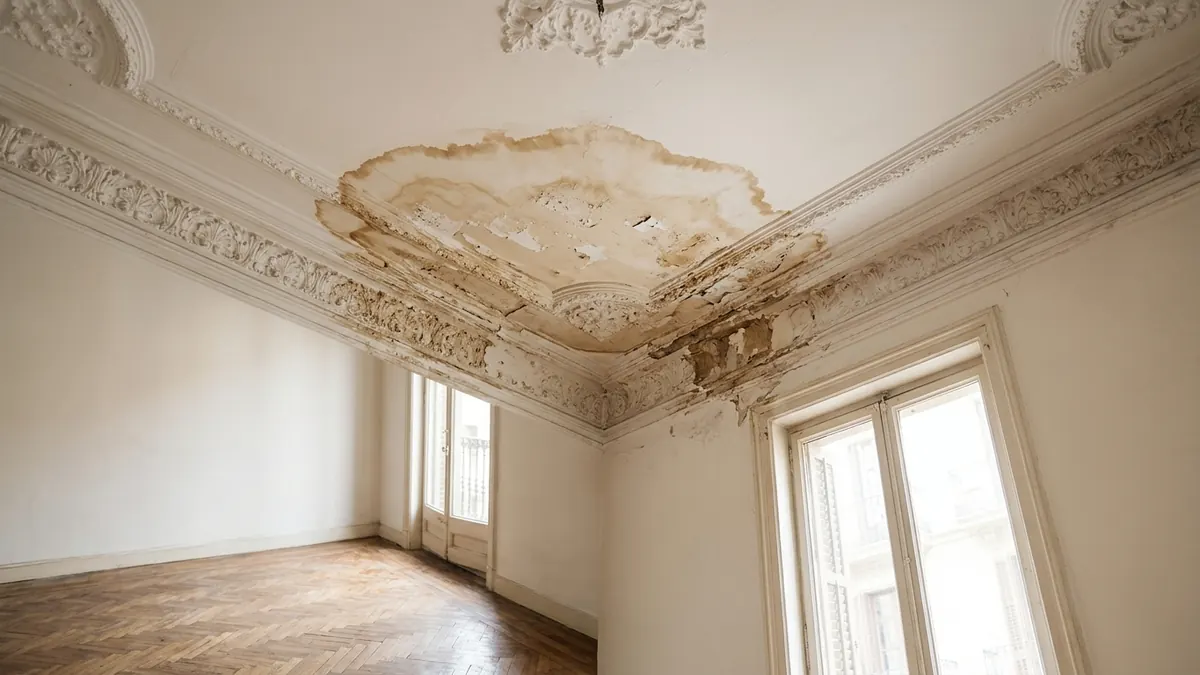
What should you do if a damp patch appears on your ceiling and you suspect the neighbour upstairs, and who pays for the repair?
If a damp patch appears on your ceiling and you suspect the flat above, first document it with dated photos, shut off the water if it is dripping, and notify your neighbour and your insurer. Then trace the source: if the leak starts in the private installation of their home, their home is responsible; if it starts in a communal element, the owners' community is responsible.
The order matters more than it seems. Almost all later problems (arguments, badly completed claim forms, ceilings painted twice) come from skipping a step.
Key points
- Dated photos and written notice come first, before you touch anything.
- Repairing the ceiling finish always comes after locating and stopping the source of the water.
- Responsibility depends on where the leak starts: private installation, communal element or roof and terrace.
- Your home insurance policy and the building administrator are your two contacts, besides the neighbour.
What to do in the first hours: photos, water and notice
Take photos and video before cleaning anything. Take wide shots of the room and close-ups of the patch, with the date visible on your phone, and repeat every few days so it shows whether the patch is growing.
If it is dripping, put a bucket under it, move furniture and electrical appliances away, and if a lamp holder or spotlight is wet, switch off the residual-current breaker or the circuit breaker for that area at the electrical panel. Water and electricity together leave no room for doubt.
Close the stopcock of your home for a moment and check whether the dripping stops. If it stops, the leak may be in your own installation. If it continues, it comes from outside.
If water is coming down hard and there is no way to stop it, it is an emergency: call the neighbour, the administrator and, if needed, a professional who can act straight away.
Talking to the upstairs neighbour and notifying the insurers
Knock on the door, calmly. Most neighbours do not know they are losing water, and a calm tone speeds everything up. Ask them to close their stopcock and check whether your patch stops growing.
If they do not answer or are not in, leave a written record: a note in the letterbox, a message, an email to the building administrator. That record is what later shows you gave notice in time.
Also notify your home insurer, even if you think the neighbour is to blame. It is usually the quickest route, because insurance companies have their own system for dealing with each other. We do not go into that mechanism or into deadlines or amounts: what your policy covers is set out in your policy, and your insurer or a broker can explain it.
If you both have insurance, a joint water damage report is usually filled in between the two of you, with the details of each home and a description of what happened. Do it with the photos in front of you and do not sign anything you do not understand.
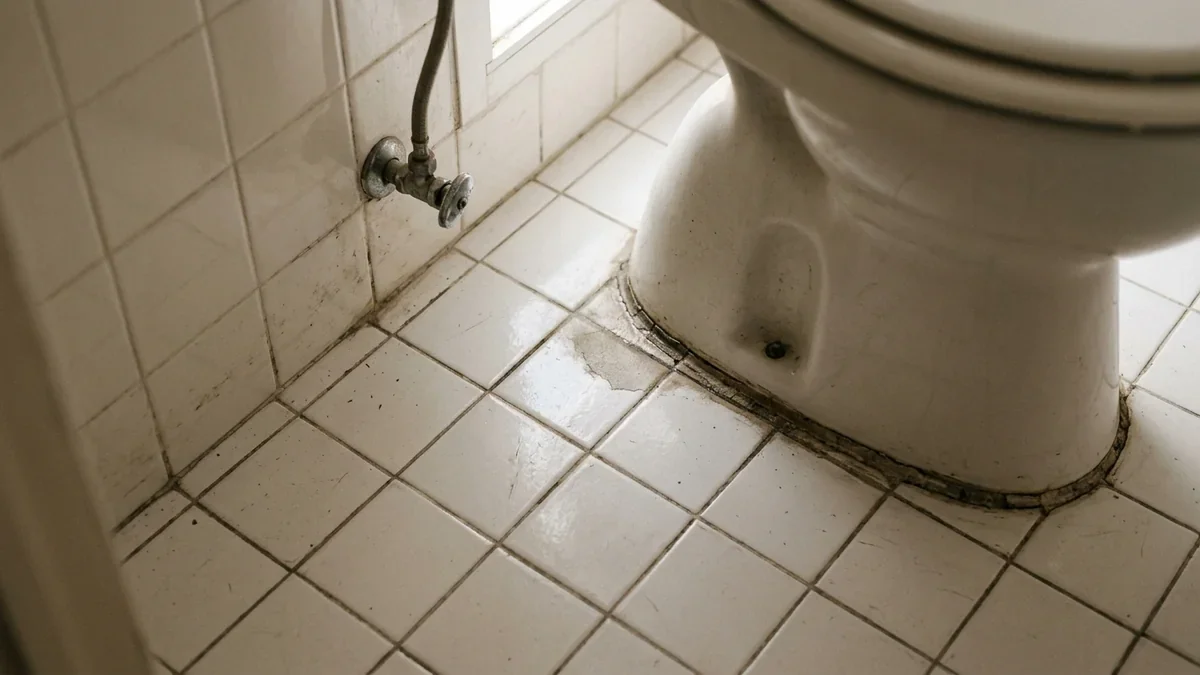
Tracing the source: private installation or communal element
This is the most underestimated phase. In old buildings in the Eixample and Gràcia, the patch on the ceiling is almost never right under the leak: the water runs along the floor slab and the wooden beams and appears metres from where it starts, so until we open up and shut off the water flat by flat, you cannot know where it really comes from.
That is why you need a method, not a hunch. Shut off the water section by section (main valve, bathroom, kitchen, washing machine) and see what changes. Check drains, traps, bath or shower tray joints and the neighbour's floor. Often it is a worn silicone joint or a floor with hollow tiles, not a broken pipe.
If the water only appears when it rains, the source points to the façade, terrace or roof. And if water always appears, check the installation and the downpipes.
One more detail: if there are cracks in ceilings and walls next to the patch, note them and take photos. They are not the same thing and are assessed separately.
Who pays depending on where the water comes from
The general rule is simple: whoever is responsible for the element the water comes from pays. The difficult part is proving where it comes from.
| Source of the leak | Who is generally responsible | Who you notify |
|---|---|---|
| Neighbour's private installation (pipe, trap, joint, appliance) | The neighbour's home, normally through their insurance | Neighbour, your insurer |
| Communal element (downpipe, façade, light well) | The owners' community | Building administrator |
| Terrace or roof | Depends on whether it is private or communal, as set out in the community statutes and the constitutive deed | Administrator, and the technician who inspects it |
In Catalonia, the owners' community is governed by Book Five of the Civil Code of Catalonia. What is communal and what is private is set by the law and by the statutes of your building, so read them or ask the administrator for them. There is no shortcut.
Terraces often cause confusion: sometimes they are for private use but the waterproofing is communal, or the other way round. Do not assume anything until you have a written technical report.
And a warning: even if the source is communal, damage inside your home usually goes through your policy or the community's. Check with your insurer and the administrator, as they know the contract.
Repair the source and only then redo the ceiling
Painting over the patch before stopping the leak is money wasted. The damp comes back, the plasterboard or plaster softens and you will have to redo everything.
The correct order of work is this: the water is shut off, the source is repaired, the area is left to dry and you check that it does not reappear. Only then is the ceiling finish repaired, with the treatment and paint required. On a plaster ceiling, scraping, treating and smoothing is usually enough. If the plasterboard false ceiling has absorbed water for weeks, the affected area is replaced.
If the ceiling is renovated in sections and has to be opened up to see, it is better for the same company to see both the source and the finish: this avoids passing the blame between trades. A fixed quote broken down by items, with a prior technical visit, makes clear what is repair of the source and what is finish, and that helps a lot when it comes to sharing costs with the insurer or the neighbour.
Frequently asked questions about a damp patch from the upstairs neighbour
Can I paint the ceiling before the leak is fixed?
It is not advisable. While water keeps coming in, the patch reappears and the material underneath deteriorates further. Painting first can also cover the evidence you need for the claim. Wait until the source is repaired and the ceiling is dry.
What do I do if the neighbour does not open the door and my ceiling is dripping?
Leave a written record of the notice and tell the building administrator and your insurer. If the dripping is heavy, report it as soon as possible: the administrator or a professional can decide how to act. Keep photos and messages.
How do I know if the damp comes from the flat above or from the façade?
If it appears with rain and sometimes on exterior walls, it points to the façade, terrace or roof. If it is constant or gets worse when water is used upstairs, it points to an installation. The reliable way is to shut off the water section by section and have a technician confirm it.
When should I notify the building administrator?
From the first moment, especially if you suspect a communal element (downpipe, façade, roof) or if the neighbour does not respond. Written notice records the date and avoids arguments about when it was known.
Further reading
- Urgent renovations in Catalonia - If the leak is active and you need to act now, this is the service for home emergencies.
- Urgent repairs in Barcelona: damp, leaks and breakdowns - An overview of damp, leaks and breakdowns, with a section on who bears the cost.
- What an owners' community is and its role in building work - To understand when the community steps in if the source is a communal element.
- Damp treatment in Catalonia - Once the source has been located and stopped, this is how damp is treated in the home.
- Cracks in walls and ceilings: which ones matter and which don't (partition vs structure) - If cracks appear next to the patch, this helps you tell the worrying ones from the harmless ones.
Keep reading
The technical visit before your renovation quote: what is checked and what to have ready
What the site manager checks in your flat, which papers to bring and which decisions to settle so the quote is a fixed quote and not an estimate.
Guides and adviceCracks in walls and ceilings: which ones matter and which don't (partition vs structure)
How to classify a crack by appearance, position and movement, monitor it at home with a method, and know when to call a competent technician.
Guides and adviceAdapting a home for a wheelchair: doors, turning space, kitchen and home automation
Check the whole route through your home, from front door to bed: doors, turning space, floors, kitchen and automation, with working measurements and guide costs.