

The technical visit before your renovation quote: what is checked and what to have ready
What the site manager checks in your flat, which papers to bring and which decisions to settle so the quote is a fixed quote and not an estimate.
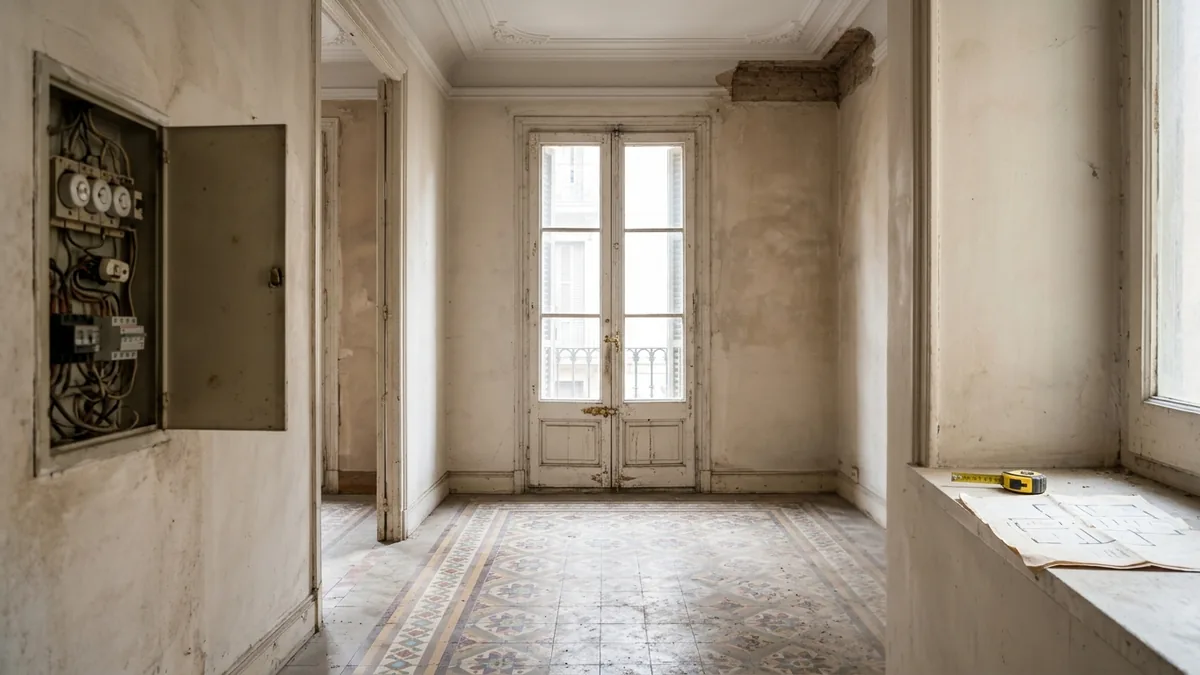
What is checked in the technical visit before a renovation quote, and what should you have ready?
The technical visit checks the electrical and plumbing installations, where the drains run, the condition of walls and ceilings, anything that looks structural and site access. To make the most of it, bring the plans and papers for the property, and decide what you want to change and what you do not.
Without that visit, you receive an approximate figure. With it, you receive a fixed quote broken down by item.
Key points
- The visit is for measuring, photographing and locating soil stacks, the electrical panel, damp and possible load-bearing walls.
- What cannot be seen (inside walls and under floors) is handled in the quote with open items or written assumptions.
- Plans, a land registry extract (nota simple) or deeds, and a clear list of changes turn an estimate into a fixed price.
- After the visit the quote arrives in writing and itemised; if something changes, it must change on paper too.
What is checked in the technical visit, area by area
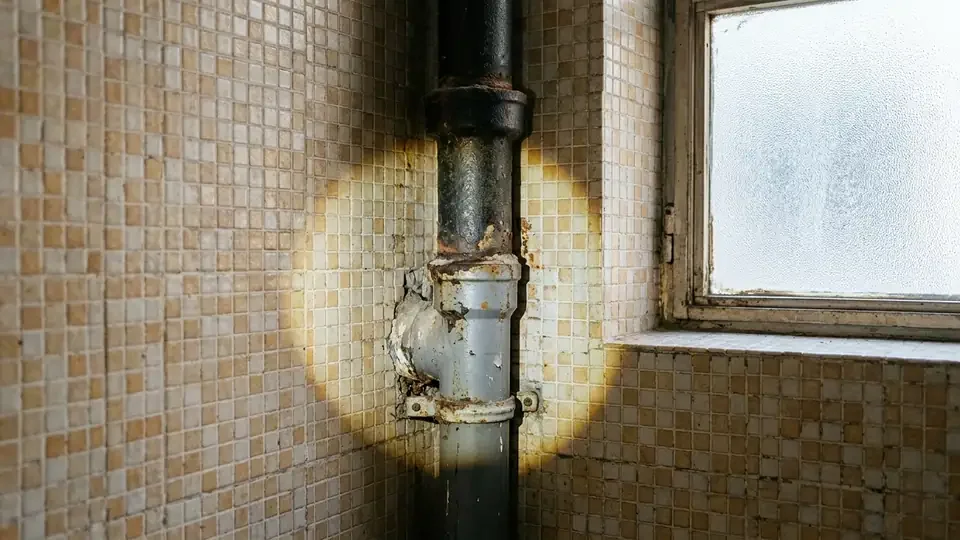
The first thing we look at is where the drains run, because that determines where the bathroom and kitchen can go. In older buildings in the Eixample and Gràcia there is almost always a brick partition hiding a communal soil stack; until the wall is opened the real extent is unknown, which is why we start there.
Next we go to the electrical panel. We count circuits and check whether there is a residual current device, whether the wiring looks as if it has been extended piece by piece and whether there is an earth connection. New installations are done in line with the REBT, and a very old existing installation usually means rewiring it entirely, not patching it.
For plumbing we check the pipe material, the pressure, where the stopcock is and whether the water heater has life left in it. On walls and ceilings we look for damp, cracks, bulging and leak stains; a stain on the bathroom ceiling points to the neighbour upstairs, not only to your own flat.
We are cautious with structure. We measure the thickness of partitions, check which way the floor joists run and note whether a wall looks load-bearing. Thickness is a guide, not a verdict: a thin wall can be load-bearing and a thick one may not be. A technician confirms it with the building plans and, if needed, with trial openings.
We also check what is not the property itself: stair width, the lift, access for removing rubble, where a skip can be placed and what rules the owners' community sets for working hours and protection of common areas.
What cannot be seen on the visit and how the quote deals with it
Nobody can see inside a wall without opening it. An honest technician says so and does not hide the uncertainty in a round figure.
The right way to handle it is to write it down. A serious quote states what has been assumed (for example, that the soil stack is accessible or that the floor under the paving is sound), which items stay open until a trial opening is made and who decides what if something turns up. That way an unforeseen problem stops being a surprise and becomes an item with a starting price.
Be wary of quotes that arrive without a visit and well below the others. If the price says nothing about installations, waterproofing or site management, those items are probably missing. That is why a quote without a visit is not reliable: someone has filled the gaps with optimism.
It is normal for an older property to hold a surprise. The difference is whether it is anticipated on paper or argued over halfway through the works.
Documents and decisions to have ready
Three things change the quality of the quote more than any others: the plans, the property papers and knowing what you want to change.
The plans can be those in the deeds, an architect's plan or even a hand-drawn one with measurements. If you have none, that is fine: we measure, but it helps a lot to know the year of the building and whether there were earlier renovations. The nota simple or the deeds give the floor area, and you should know whether it is usable or built area; the unit of measurement must appear in the quote.
It also helps to bring the habitability certificate (cédula de habitabilidad) if you have it, the latest electricity bill showing the contracted power and, if the building has passed its building inspection (ITE), the report. And, if the owners' community has rules for works, the regulations or statutes.
The second part is the decision. You do not need to know the tap model, but you do need to know the following:
- Which layout you want to keep and what you want to move (kitchen, bathroom, partitions).
- What level of finish you are after: basic, mid-range or high, because the difference between them can double the cost of the same flat.
- What you want to keep: original flooring, joinery, windows.
Moving the kitchen or opening it to the living room is not the same as renewing it where it is, and the quote reflects that. If you are unsure, tell the technician; it is better for the quote to cover two options than to discover the change once the works have started.
If you want an idea of the order of magnitude before anyone visits, a guide calculator will do. But the fixed price only comes after the visit.
What to ask during the visit and what to expect afterwards
Ask what they have seen that worries them and which items they would leave open. Ask also whether a prior notification (comunicación previa) or a works licence is needed and who handles it; in our case, handling the paperwork is a separate item in the quote. And ask about the schedule: who runs the works day to day and how the trades are coordinated.
The visit is usually short for an ordinary flat, but it depends on size, on whether inspection hatches need opening and on how many questions you bring. Do not rush it: it is the cheapest moment to spot problems.
After the visit you should receive a written quote, itemised and with the finishes described. If something that was discussed is missing, ask for it in writing. What is agreed by word of mouth gets forgotten on site, so it should end up in the contract and in the payment schedule.
The time needed to deliver the quote depends on the complexity of the property and on whether trial openings are pending; ask for a specific date before you leave.
Guide prices · VAT not included. Amounts and scope for each project are indicative and not a binding offer: the fixed price comes after the free technical visit.
Frequently asked questions about the technical visit
Is the technical visit for a renovation free?
At Tu Nuevo Piso the preliminary technical visit is free. It is used to measure, see the real condition of the property and prepare a fixed quote by item, with no obligation to hire. Always ask whether the company you invite charges for it or not.
How long does a renovation technical visit take?
It depends on the size of the flat, its age and how many doubts there are. An ordinary flat does not need a whole day, but if hatches have to be opened or soil stacks checked it takes longer. It is better to give it time than to be left with doubts.
What documents do I need to ask for a renovation quote?
The most useful are the plans or a nota simple showing the floor area, the habitability certificate if there is one, the latest electricity bill and the ITE report if the building has one. If you lack any of them, the technician can measure and check.
Why is a quote without a visit not reliable?
Because nobody knows the condition of installations, soil stacks and walls without seeing them. Without a visit the gaps are filled with assumptions, and what was not counted appears later as an extra. A fixed quote comes from having seen the flat.
Further reading
- Full home renovation checklist: the decisions to make before you start - The decisions worth settling before the technician visits, set out one by one.
- Calculate your renovation budget - A first guide range so you know the order of magnitude before the visit.
- How to read and compare a renovation quote - When you receive the fixed quote, this is how to read it item by item and compare it with others.
- Full renovations in Barcelona for older flats, houses and commercial premises - How a complete full renovation works, from the visit to handover.
Sources
Keep reading
What to check in a flat before buying it to renovate: a viewing checklist
Seven areas to check on the viewing and the work item each finding triggers, with guide figures, before you sign the deposit contract (arras).
Guides and adviceRubble and skips in a renovation: real volumes, street permit and price
A 7.5 m² partition wall leaves around 1 m³ of rubble. Here is how to remove it, which permit to confirm with your town hall and what it usually costs per m³.
Guides and adviceDamp patch on the ceiling: what to do with the upstairs neighbour and who pays
What to do in the first hours, how to talk to your neighbour and the insurers, and who is responsible depending on where the water leak starts.