

Activity licence or works licence for a commercial unit: which comes first and how they fit together
The works licence and the activity licence are not the same thing, and they cannot be applied for in any order. Here is how they fit together before you rent or renovate a unit.
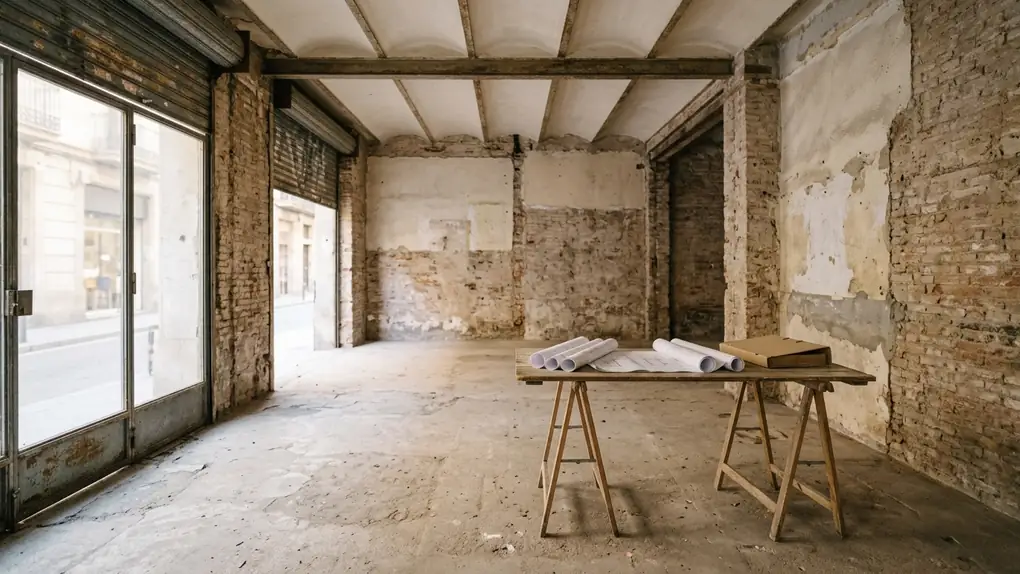
What comes first for a commercial unit, the activity licence or the works licence?
For a commercial unit, the activity licence and the works licence are two separate procedures that are planned together, and the town hall sets the exact order according to your activity. The usual start is the preliminary enquiry: there you are told which regime applies and what must be submitted before a single wall is knocked through.
Almost nobody starts there. The lease is signed, a works quote is requested, and only then does someone ask whether the unit allows the business.
Key points
- The works licence allows you to carry out the works; the activity licence allows you to run the business in that unit. Neither replaces the other.
- There are three cases: works without a change of activity, a change of activity without works, or both at once.
- The usual sequence is preliminary enquiry, technical project, works procedure, execution and opening procedure. The fine detail of the order depends on the municipality.
- Timescales and fees are set by each town hall: confirm them with yours and do not assume them.
- The costliest mistake is paying for works that then do not fit the activity you wanted.
They are two different procedures and they do not authorise the same thing
The works licence authorises a specific piece of work in the unit; the activity licence authorises a specific activity there. One is about building work, the other about what you will sell, cook or serve inside.
This is the most repeated mistake: thinking that once the works are approved, everything is done. It is not. You can have fully legal works and still be unable to open because the activity has not been notified or authorised.
On the works side, the distinction is the usual one. An interior renovation that does not touch the structure or the façade normally goes through a prior works notification. If it affects a load-bearing wall, the façade or structural elements, you need a signed technical project and site supervision, under Law 38/1999 on Building Regulation (the Building Act LOE), and a major works licence from the town hall. Which procedure applies is confirmed by the town hall itself through its preliminary enquiry.
On the activity side, the rules are regional and municipal. Catalonia has an activities law that sorts activities into regimes of varying strictness (from a simple notification to a licence with prior control), and each town hall applies it in its own way. I will not give you licence names or timescales for a specific city here: they change, and you should check them on your municipality's procedures website.
If you ever see both mixed into a single quote, ask which item covers each one. They involve different documents, different technicians and often different fees.
The three real cases: works without a change of activity, a change of activity without works, or both
Almost any unit falls into one of three cases, and knowing which one you are in puts everything else in order.
Case one: works without a change of activity. The unit already has its activity in order and you only want to renew the floor, ceilings, lighting or interior layout. The works procedure governs here. The existing activity does not disappear, but if the renovation changes things that affect it (layout, exits, toilets, ventilation), have the technician review it before touching anything.
Case two: a change of activity without works. You move into a unit that suits your business as it is, or nearly so. There is no works procedure, but the activity procedure is still there. And this is what surprises people most: you may not touch a single partition and still have to notify or apply for the new activity.
Case three: both. You change the activity and also adapt the unit. This is the most common case when someone rents a unit that used to be something else. Here the two procedures overlap, because the works exist so that the unit meets what the activity requires.
| Case | Works procedure | Activity procedure | What is checked first |
|---|---|---|---|
| Works without a change of activity | Yes, depending on scope | Normally no, unless the works alter what is authorised | What the works touch and whether they affect the current activity |
| Change of activity without works | No | Yes | Whether the unit allows the new activity |
| Works and change of activity | Yes | Yes | What the activity requires of the unit and which works achieve it |
The table is a reading guide, not a ruling: each activity and each municipality has its exceptions. If your case is a change of activity, the works and the procedures that come with it are covered separately.
One question that comes up a lot: do I need an activity licence if I only change the floor and the decoration? If the activity stays the same and you do not touch what conditions it, normally not. But that is confirmed by the town hall, not by me or the installer.
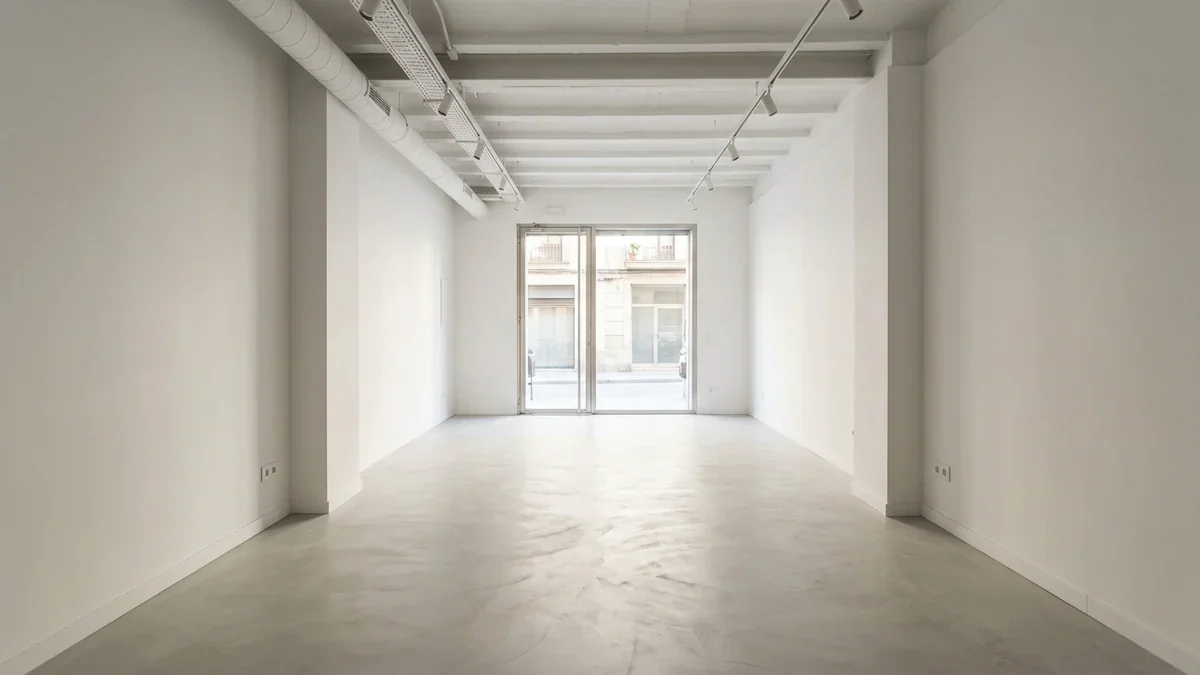
The usual sequence, from the preliminary enquiry to opening
The order that works best starts by asking, not by building. This is the sequence we usually see, always "the usual" and not a universal rule.
- Preliminary enquiry to the town hall. You ask whether your activity can be carried out at that address and which regime applies. It is the official route to know which procedure each thing requires.
- Technical visit and feasibility. A technician reviews the unit: floor area, heights, exits, ventilation, installations, whether there is a toilet. That shows which works are needed to comply.
- Project or technical report. Depending on what applies, the technician drafts the documentation for the works and for the activity. Often both come from the same base work.
- Works procedure and activity procedure. They are submitted in a coordinated way. In some municipalities they can be processed together; in others one conditions the other. Ask how yours does it.
- Carrying out the works. With whatever applies already submitted or granted, the works begin. The installations are done, with their certificates.
- Completion and opening. The final documentation for what was built is provided and the activity procedure is closed so that you can open.
Note what is not in the list: numbers of days. They depend on the town hall and the activity, and anyone who promises them from memory is selling you hot air.
On the question of whether you can start the works without the activity licence: it depends on which works and which municipality. In general, the works have their own procedure and do not start without it, but whether the activity procedure comes after or before is not answered the same way everywhere. When there is no certainty, the honest answer is "confirm it with your town hall".
Who does what: holder, technician, town hall and renovation contractor
Four parties are involved, and each should be clear about its part. Otherwise everyone assumes someone else is handling it.
The activity holder, that is, whoever will run the business, is responsible for the activity. In a rented unit this is usually the tenant, not the owner. But the owner may need to authorise the works or provide documents for the unit, so the lease should make clear who does what. If you are in the middle of a business transfer, first check which activity the unit currently has.
The competent technician (architect or engineer, depending on the case) signs projects and reports, and certifies that what was built complies. They turn what the town hall asks for into a drawing and a list of works.
The town hall decides, receives notifications and checks. It is the only one that can tell you with authority which regime applies. The Metropolitan Building Ordinances and municipal ones can be stricter than the general rules.
The renovation contractor carries out the works once the project is defined. In our case, we handle the prior works notification or the licence, and its cost appears as its own item of the fixed quote, alongside the certificates for the new installations. What the contractor does not do is decide for the town hall which activity your unit allows.
Almost everyone who comes to see us with a rented unit, or one they are about to buy, asks about the works budget before knowing which activity they will be able to carry out there. Until you look at what the unit allows and which procedure applies, you do not know whether the works are the easy part or the hard part. That is why our free technical visit serves, among other things, to put those questions in order before talking about euros.
Ordering mistakes that get expensive before you open
The mistakes that cost the most money are not about building work, they are about timing. These are the ones that keep recurring.
Signing the lease or the purchase without a preliminary enquiry. This is the biggest. If the unit does not allow your activity, you have already paid a deposit, rent or a purchase. Checking the procedures before renting or buying is cheap; undoing a contract is not. And if you are thinking of converting the unit into a home, feasibility is checked before buying, not after.
Starting the works without the right procedure. Works without a notification or licence can end up halted or fined, and what has been done may have to be redone. It is not worth the time you think you are saving.
Asking for a quote without knowing the activity. A quote for a unit without that information is a hypothesis. The requirements of the activity change installations, ventilation and layout, and with them, the items.
Opening without the activity in order. Opening without a licence, or without having completed the relevant notification, exposes you to fines and closure of the business. The exact consequences and amounts are set by each town hall, so I will not work them out here; ask yours.
Assuming that what the previous tenant did is valid. That the unit operated as a bar does not mean its activity is in order or that it works for yours. Ask for the documentation and have a technician review it.
A written fixed quote, with licences and technicians as their own item, saves you surprises halfway through the works. But it does not fix a unit that does not allow your activity: that is resolved beforehand.
Frequently asked questions about the activity licence and the works licence
What comes first, the activity licence or the works licence?
The usual approach is to ask the town hall which regime applies to your activity and plan both procedures together. The works do not normally start without their own procedure, nor does the business open without closing the activity one. The exact order depends on the activity and the municipality.
Can I start the works without having the activity licence?
It depends on the municipality and the works. The works have their own procedure (prior notification or licence depending on scope) and should not start without it. Whether the activity procedure must come before, at the same time or after is confirmed through the town hall's preliminary enquiry.
Who applies for the activity licence, the owner or the tenant?
Normally it is handled by whoever will carry out the activity, who in a rented unit is usually the tenant. The owner may need to give authorisation for the works or provide documents for the unit. It is wise to put this in writing in the lease.
Do I need an activity licence if I only change the floor and the decoration?
If the activity does not change and the renovation does not alter what conditions it, a new activity procedure is normally not needed, although the relevant works procedure is. The town hall confirms it, so ask before you start.
What happens if I open without an activity licence?
You risk fines and the town hall ordering the unit closed until the situation is regularised. The amount and the procedure are set by each municipality. It is much cheaper to process it before opening than to regularise it later with the business already running.
Further reading
- Commercial unit renovations in Catalonia - What a commercial unit renovation includes in Catalonia, to place the works within the whole picture.
- Commercial unit renovations in Barcelona - How we work on units in Barcelona, with the free technical visit as the first step.
- Building licence in Barcelona: minor works, notice and major works - The works side explained in detail: minor works, notification and major works.
- Licences and projects in Catalonia - How we handle licences, prior notifications and technical projects within the quote.
Sources
Keep reading
Commercial renovation in Barcelona: restaurants, offices and shops
Renovating a commercial unit in Barcelona is a business project where the activity licence, timescales and compliance matter as much as the design. This guide explains how to approach restaurants, offices and retail.
Commercial and communitiesAnnual maintenance plan for an owners' community: a month-by-month calendar
What to check in the building and in which month: roof and downpipes in autumn, façade and flat roof in good weather, and how to record it all for the ITE.
Commercial and communitiesOwners' community and renovation works: rules you need to know
A 2026 guide to how a Spanish owners' community works, its role in renovations, the limits on your works and the votes and permits you need.